viewBOOK FOUR: Revolution Without Revolutionaries: Making Sense of the Arab Spring by Asef Bayat
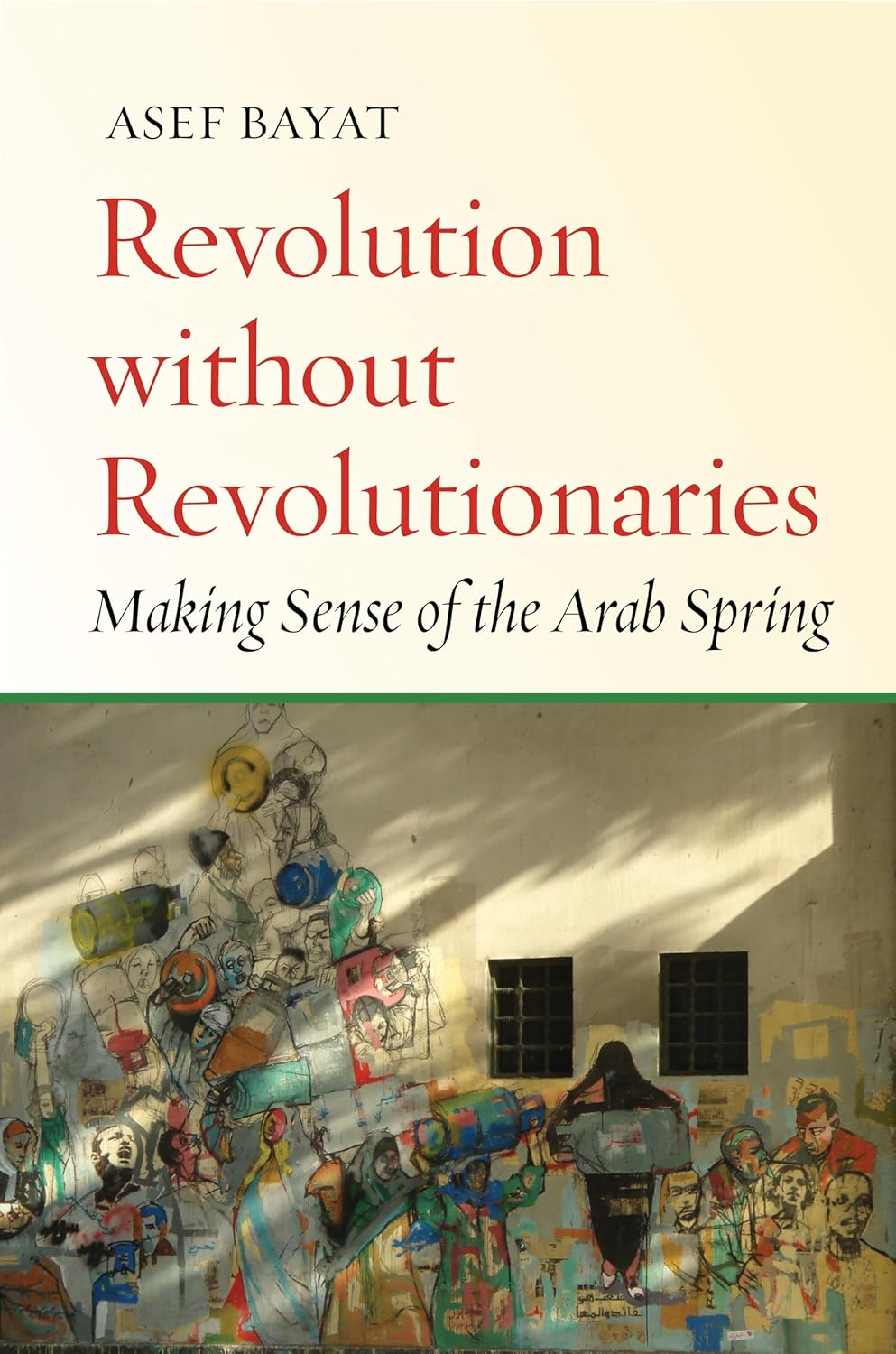
In our fourth book club meeting, we centered the discussion around the book Revolution Without Revolutionaries: Making Sense of the Arab Spring by Asef Bayat. This booked served us as a vehicle to talk about the War on Iran and its escalation, but it also posed many questions about classic revolutions versus what the author coins 'ref-olutions', that is: revolutionary moments which redirect mobilizations towards reform, without dismantling the state. We discussed Asef Bayat's comparison between the Arab Spring & Iranian Revolution, especially his argument that the latter had a clearer direction ideologically.
Read more...
viewBOOK THREE: Bad Mexicans: Race, Empire, and Revolution in the Borderlands, By Kelly Lytle Hernández

During our third book club meeting, we discussed Bad Mexicans: Race, Empire, and Revolution in the Borderlands by Kelly Lytle Hernández, focusing on how the book reframes the Mexican Revolution through migration, repression, and cross-border struggle rather than treating it as something confined within Mexico alone. A major point that stood out to us was that Mexicans were the first non-Anglo mass migration into the United States, and that this movement laid a broad foundation for future generations of migrants while also shaping the history of the border itself. We reflected on how the book opens with the lynching of Antonio Rodriguez and uses that violence to show how anti-Mexican racism, forced displacement, and revolution were already deeply intertwined.
Read more...
viewBOOK TWO: The Haitian Revolution, By Toussaint Louverture

During our second book club meeting, we discussed The Haitian Revolution by Toussaint Louverture as more than a story about the overthrow of slavery. We focused on what freedom requires after liberation has been won: moral leadership, collective responsibility, discipline, unity, labor, and the ongoing defense of independence. As we moved through the reading, we kept returning to the idea that revolution is not only an act of resistance, but a process of building something new. We also sat with the tensions in the text, especially around the language of republican law, the meaning of justice, and the contradictions that appear when freedom is spoken about through systems still shaped by empire and racial hierarchy.
Read more...
viewBOOK ONE: Freedom Is a Constant Struggle: Ferguson, Palestine, and the Foundations of a Movement, By Angela Y. Davis

In our first book club meeting, we centered our discussion on Freedom Is a Constant Struggle and reflected on how liberation movements are built collectively rather than through any one individual. A major theme of the conversation was how oppressive systems isolate people and make it harder to imagine change, while community, vulnerability, and genuine connection help create hope, belonging, and a stronger foundation for organizing. We also talked about how people are often drawn into movements through care, shared struggle, and the sense that they are part of something larger than themselves.
Read more...