BOOK THREE: Bad Mexicans: Race, Empire, and Revolution in the Borderlands, By Kelly Lytle Hernández

During our third book club meeting, we discussed Bad Mexicans: Race, Empire, and Revolution in the Borderlands by Kelly Lytle Hernández, focusing on how the book reframes the Mexican Revolution through migration, repression, and cross-border struggle rather than treating it as something confined within Mexico alone. A major point that stood out to us was that Mexicans were the first non-Anglo mass migration into the United States, and that this movement laid a broad foundation for future generations of migrants while also shaping the history of the border itself. We reflected on how the book opens with the lynching of Antonio Rodriguez and uses that violence to show how anti-Mexican racism, forced displacement, and revolution were already deeply intertwined.
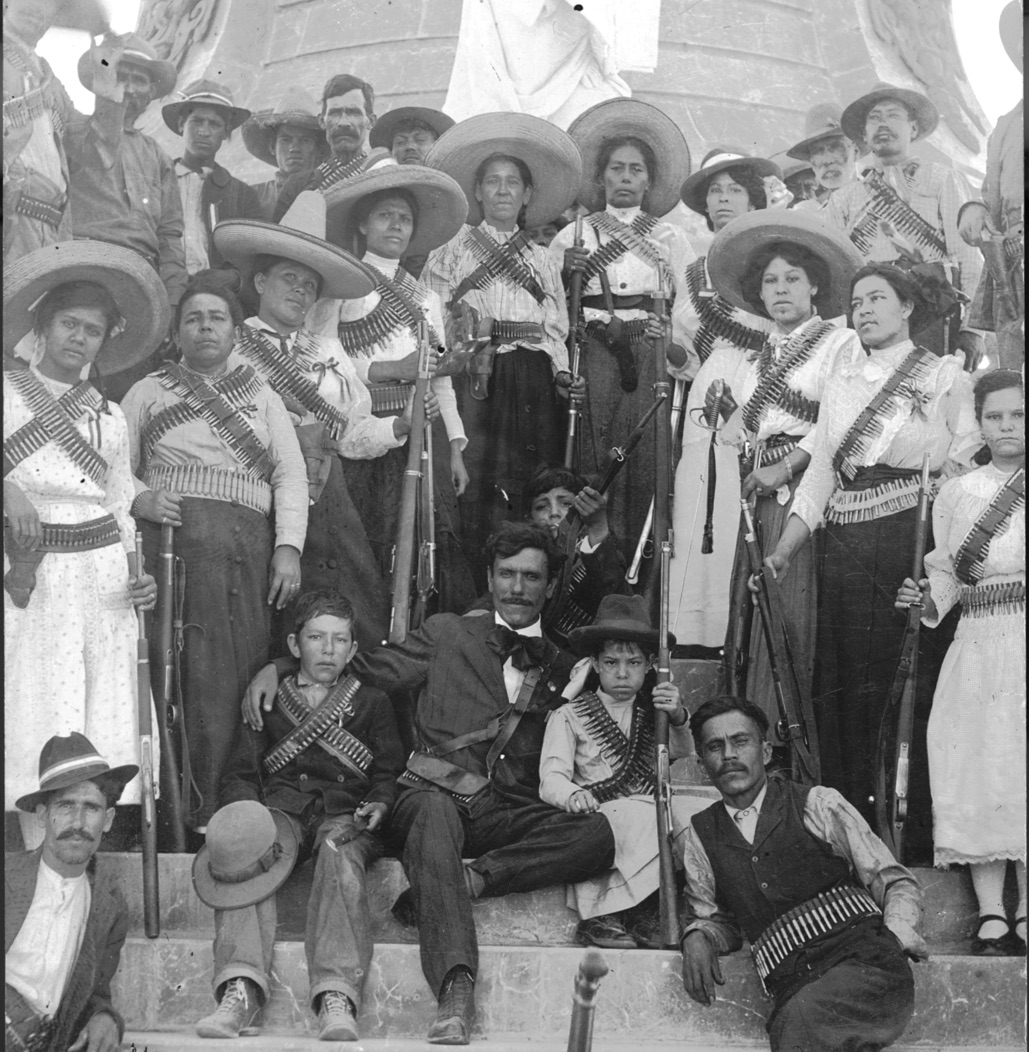 Lázaro Gutiérrez de Lara (a Mexican lawyer, journalist, labor leader, and revolutionary activist associated with the Mexican Liberal Party – PLM) posing with Soldaderas carrying heavy equipment for their fellow soldiers during the Mexican Revolution.
We also focused on the magonistas and the Partido Liberal Mexicano as a movement made up of workers, migrants, women, exiles, and ordinary people who challenged Porfirio Díaz from both sides of the border. What stood out was the way Hernández shows that U.S. history and Mexican history were never separate in this period: Díaz’s regime was tied to U.S. investment, Mexicans in the United States faced racial violence and surveillance, and the U.S. government actively worked to undermine the movement. We also discussed how the book complicates the term “liberal,” since in the mexican historical context it referred to people organizing, fighting, and risking everything, not the more passive meaning the word can carry in U.S. politics today.
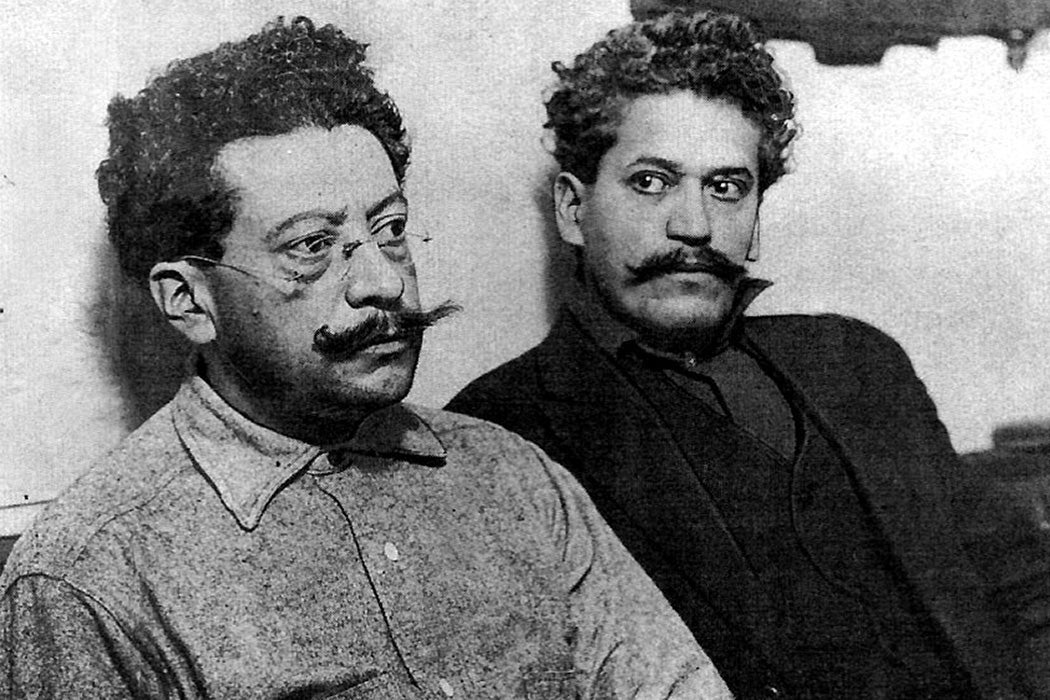 Ricardo Flores Magón (left) and his brother Enrique in the Los Angeles County Jail, 1917.
“Aceptad el dolor que, aunque lejano, pueda aportar al mundo un beneficio; noble es que el hombre sufra por su hermano: toda conquista del linaje humano tiene bases de duelo y sacrificio.”
“Accept the pain that, though distant, may bring a benefit to the world; it is noble for a person to suffer for his brother: every achievement of humankind is founded on grief and sacrifice.”
— Juan Sarabia
A major part of our conversation centered on Chapter 3, “Regeneración: A Newspaper as a Weapon,” and on the idea that media can be used not just to comment on struggle, but to build it. We talked about how the Flores Magón brothers turned Regeneración into a journal of combat that exposed corruption, crossed borders, spread radical ideas, and pushed people toward action. At the same time, we sat with the tension the notes raise around Ricardo Flores Magón himself: his politics were visionary and far ahead of their time, but the book also argues that belief alone is not enough, and that revolutionary politics depend on what people are materially able to do. By the end of the meeting, that discussion carried back into our own group as we started thinking more intentionally about structure, roles, projects, and what kind of collective practice we want to build from what we study.
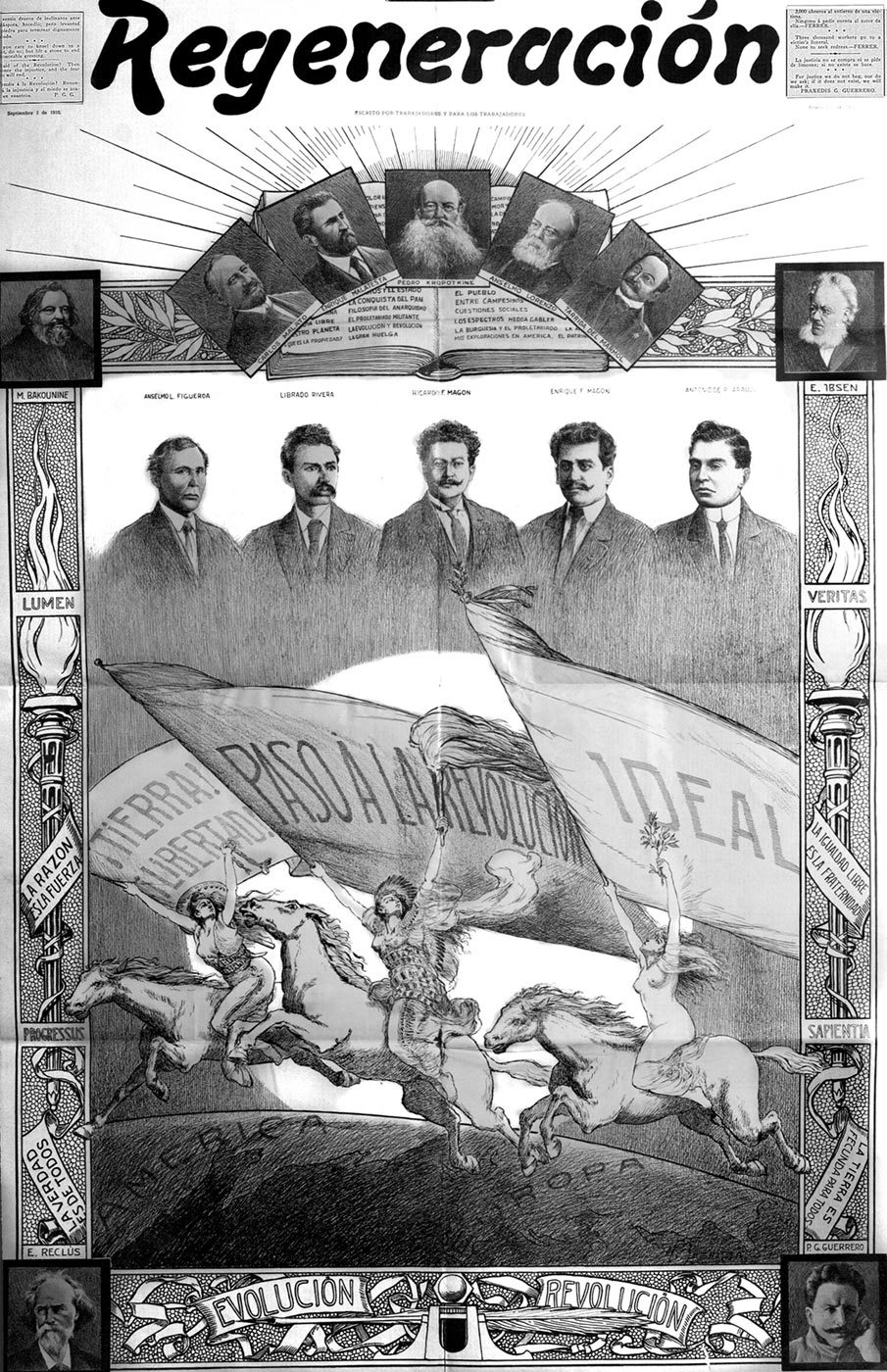 Cover of a publication by Regeneración during the onset of the revolution 1910.