BOOK TWO: The Haitian Revolution, By Toussaint Louverture

During our second book club meeting, we discussed The Haitian Revolution by Toussaint Louverture as more than a story about the overthrow of slavery. We focused on what freedom requires after liberation has been won: moral leadership, collective responsibility, discipline, unity, labor, and the ongoing defense of independence. As we moved through the reading, we kept returning to the idea that revolution is not only an act of resistance, but a process of building something new. We also sat with the tensions in the text, especially around the language of republican law, the meaning of justice, and the contradictions that appear when freedom is spoken about through systems still shaped by empire and racial hierarchy.
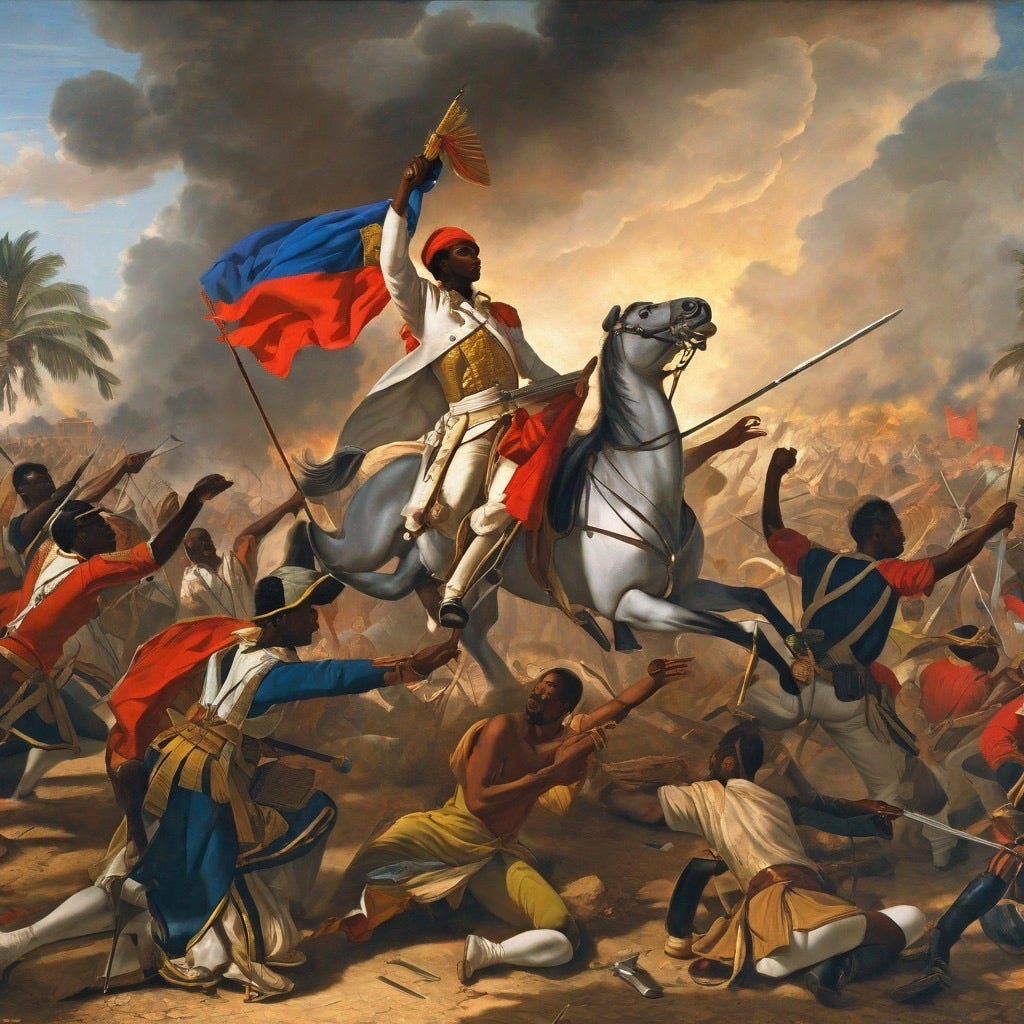 This image shows a Black revolutionary leader on a white horse at the center of a chaotic battle scene, raising his right fist as the Haitian flag waves behind him. Surrounded by fighters, smoke, and weapons, the scene is dramatic, yet heroic.
We also connected the reading to contemporary struggle by discussing the uprisings in Nepal and thinking about what present-day movements can teach us about organization, speed, communication, and escalation. We were interested in how people used online platforms to coordinate action quickly and how modern tools can shape collective response, but we also approached that discussion critically, paying attention to the intensity of those tactics and the political questions they raise. Rather than treating historical revolution and present-day unrest as separate, we used both to think through what makes mass action possible, what sustains it, and what lessons can be carried forward into our own political context.
From there, we shifted into imagining what our own book club could create and practice together. We talked about zines, physical media, and public-facing resources on topics like immigration, Narcan, food justice, abortion access, and community care. We also discussed volunteering, sharing resources, and building forms of action that connect political education to material support. Underneath all of this was a broader conversation about what kind of space we want this group to be: one grounded in mutual respect, openness, accountability, and room for disagreement, where everyone has a voice and where reading becomes a starting point for collective learning, creativity, and action.
Quote from an infographic by AFRO-PUNK
“The romanticization of revolutions is distorting the reality.
Many of us have said “I cant wait for the revolution,” and while the sentiment comes from a place of yearning for freedom and justice, we must ask ourselves – are we truly prepared for what that means? Too often, we romaticize revolutions because we have yet to experience one in our own lifetime.
The slogans, the imagery, the chants – these are easy to embrace. But the actual work of revolution, the sacrifice it demands, is not a beautiful story.
Our brothers and sisters in Haiti, Sudan, and across the world are paying deeply and painfully for daring to free themselves. Their revolutions are marked not by hashtags or poetioc declarations, but by hunger, displacement, bloodhsed, and loss. They remind us that revolution is violent and dangerous, that liberation always carries a cost.
To imagine otherwise is to indulge in fantasy, one that risks making us passive observers instead of prepared participants.
We must also confront the harder truth: revolution means giving up our comforts. It demands that we stop living in theory and begin living in action. It asks us to choose discipline over convenience, community over individualism, and sacrifice over safety.
So we must turn inward and ask: what is my role in the revolution? Not in theory, not in rhetoric, but in practice. Am I ready to face the consequences of resisting oppressive systems?
Am I willing to risk, to give, to transform my daily life into an extension of the struggle? Revolution is not simply a moment – it is a process of unlearning, organizing, and building structures that can withstand the collapse of the old.
If we are serious about liberation, we must ground ourselves in reality rather than romance. Only then can we honor those who have sacrificed before us and prepare ourselves for the work ahead.”
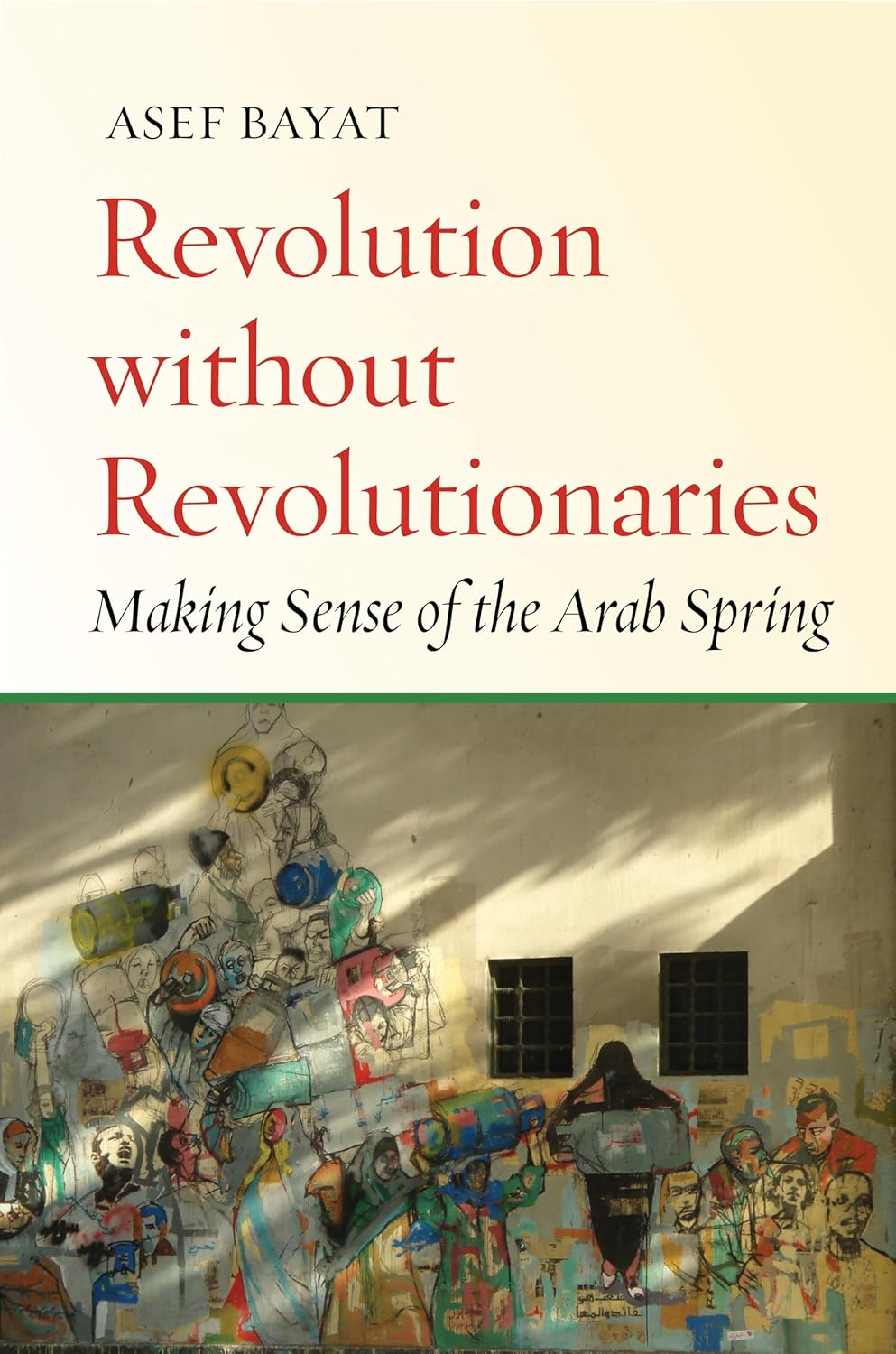
 Asef Bayat is Professor of Sociology, and the Catherine and Bruce Bastian Professor of Global and Transnational Studies at the Department of Sociology, University of Illinois, Urbana-Champaign. Before joining Illinois, Bayat taught at the American University in Cairo for many years, and served as the director of the International Institute for the Study of Islam in the Modern World (ISIM) holding the Chair of Society and Culture of the Modern Middle East at Leiden University, The Netherlands. In the meantime, he had visiting positions at the Universality of California, Berkeley, Colombia University, Oxford, and Brown.
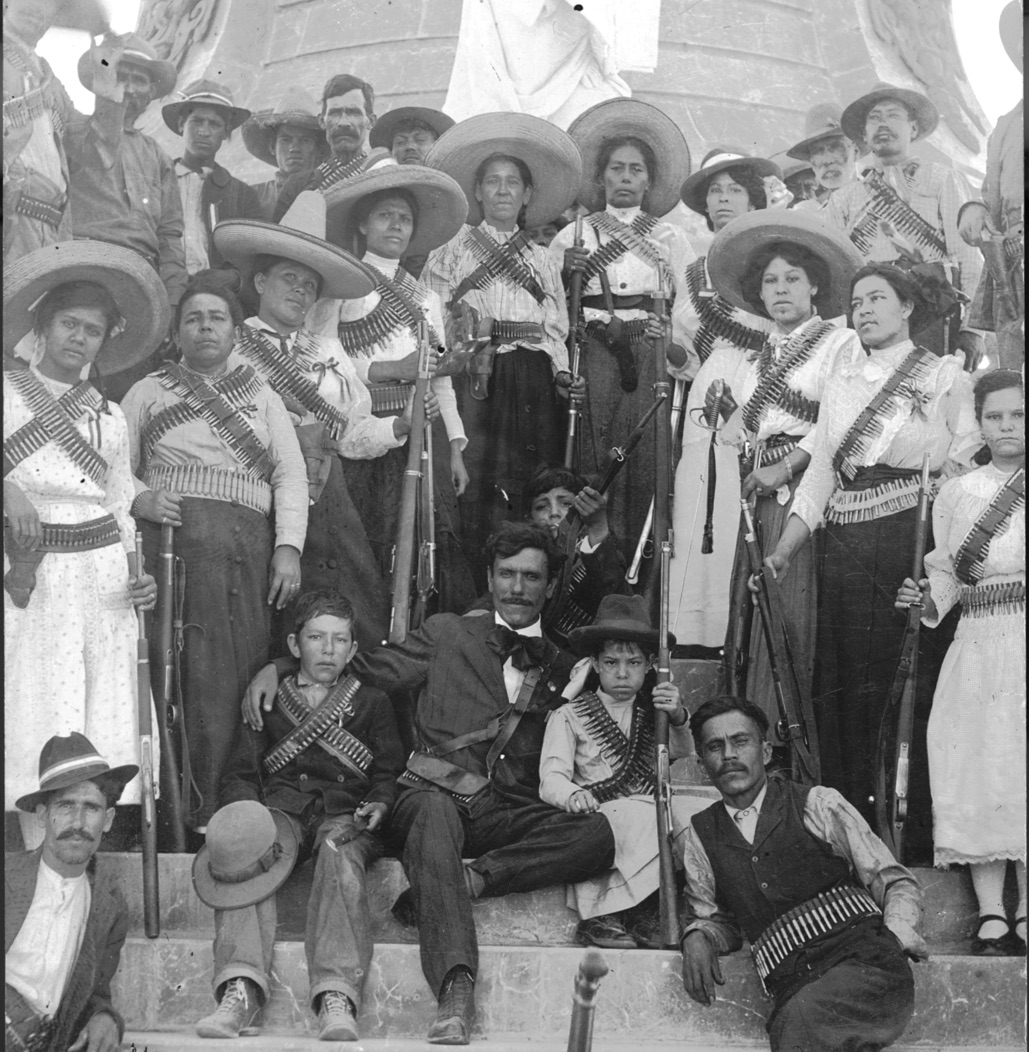 Lázaro Gutiérrez de Lara (a Mexican lawyer, journalist, labor leader, and revolutionary activist associated with the Mexican Liberal Party – PLM) posing with Soldaderas carrying heavy equipment for their fellow soldiers during the Mexican Revolution.
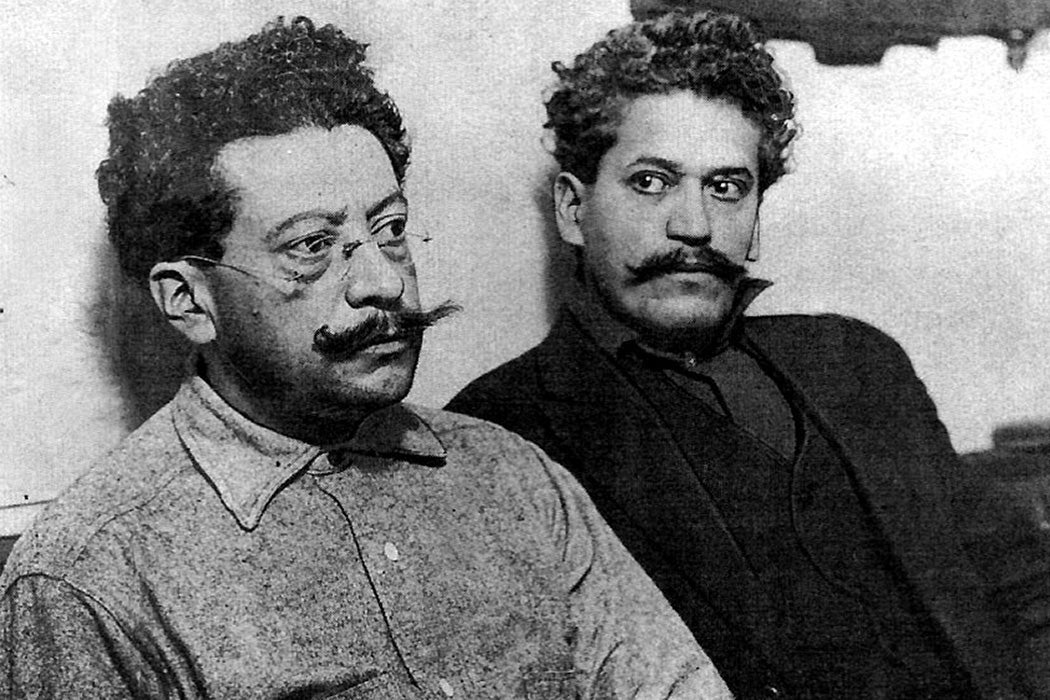 Ricardo Flores Magón (left) and his brother Enrique in the Los Angeles County Jail, 1917.
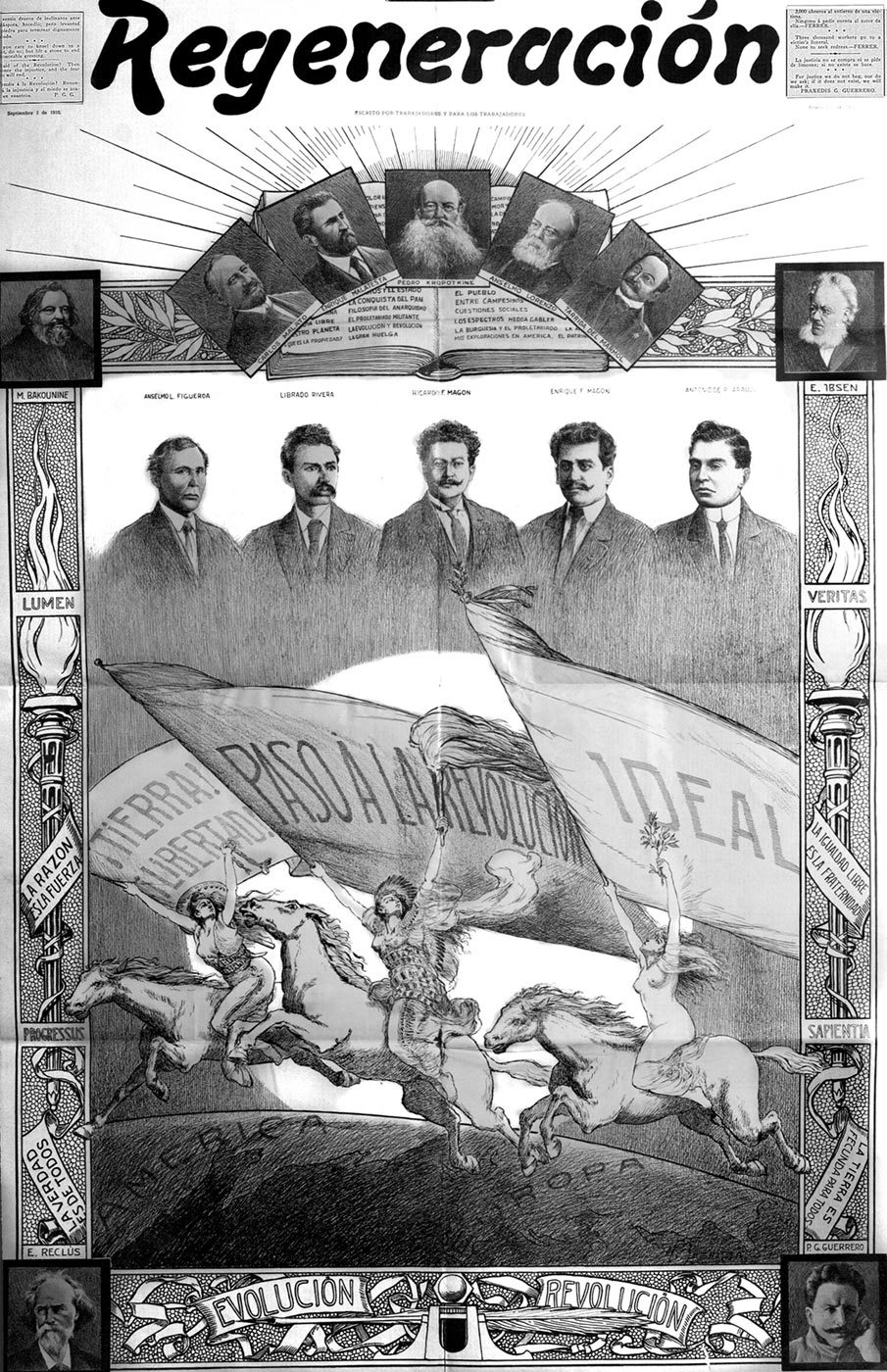 Cover of a publication by Regeneración during the onset of the revolution 1910.
 Educator, activist and author Angela Davis (1944-) became known for her involvement in a politically charged murder case in the early 1970s. Influenced by her segregated upbringing in Birmingham, Alabama, Davis joined an all-Black branch of the Communist Party as a young woman.